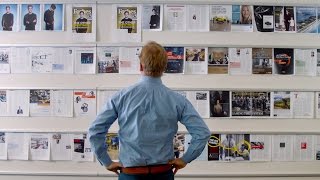
- I often look at the news
to find problems around the world.
I heard about the Zika virus outbreak,
and I wanted to use gene editing techniques
to help prevent this from happening.
And then I heard about Malaysian Airlines going missing.
So, I created a blackbox finder.
But then, I found out about Flint.
Which was one of the biggest problems I'd ever seen.
My name is Gitanjali Rao. I'm a scientist and an inventor.
Google presents
Search On: An original documentary series
Positive Current Episode 8
In 2014, Flint switched their water source
from Lake Huron to the Flint River,
which caused lead contamination
in drinking water.
The part that hit me the most was that there are all
these children who don't deserve unclean water to drink.
I wouldn't want that to happen to me or my family.
So, why should it happen to them?
Denver, Colorado
I saw my parents testing for lead
and other contaminants in our drinking water,
and it wasn't reliable or it was inconvenient.
- The current test for lead could take up to two weeks.
That is quite expensive
and is very laborious to get a result.
- So, what I wanted to do was
to create a lead in water detection tool.
I came across this new technology
using carbon nanotube sensors
and wanted to expand the idea
to detect Lead in drinking water.
In the beginning, I wasn't even sure
if this idea would even work.
I needed guidance and I needed a lab.
Denver Water Company
- When I met Gitanjali,
I thought that she conducts herself
pretty much like an adult.
She's combining the skills of an engineer,
of a scientist, of a designer.
So, we decided to partner up with her because we have
a common goal to provide safe drinking water.
- When they offered me the lab space
I come home and I start screaming my head off.
It's like "aaghh!" or something like that.
I was so excited.
I knew that if I could get this to work,
I could help so many residents of Flint.
My device is named Tethys
after the Greek goddess of fresh water.
To create Tethys, I went through a lot of different versions
and now it's a 3D printed, fully wired device.
In order to test for lead in the water, using Tethys,
you attach a disposable lead sensor cartridge
specially treated with chloride ions.
If the water has lead, it sticks to the chloride ions
and causes resistance to the flow of current.
So, the more resistance, the more lead.
To display the results I wanted to create an app,
so I used Android App Maker because that's what was easiest
for my first time creating an app.
I connected the device to the phone using Bluetooth,
and I could see my result of either safe,
slightly contaminated or critical.
- She's just amazing, she's taken advantage
of that knowledge and that passion
to build something that is for the benefit of humanity.
Flint, Michigan
- Coming to Flint
just makes me want to work harder.
People are lined up for hours waiting to get bottled water,
which won't even last them a whole month.
I know my device only solves a small part
of this huge problem,
but if people can test their water themselves,
that gives them the power to do something about it.
- Society tells you
that you can't do certain things
because you are a child or because you are a female.
Seeing someone like Gitanjali,
so eager, so smart, so prepared.
She's pushing the envelope, not only for herself
but for other generations to come.
To all those building a brighter future
Search on.